





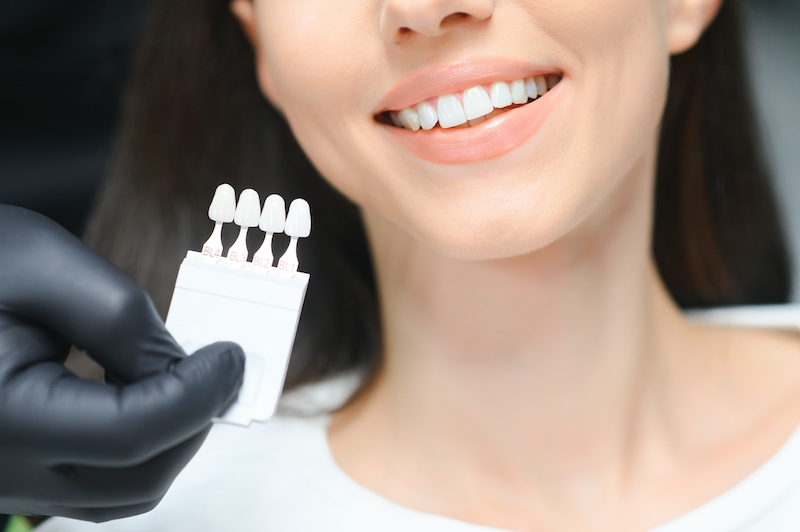

Veneers are a cosmetic dentistry procedure involving thin shells of tooth-colored material that are custom-made to cover the surface of teeth. Their purpose is to improve the appearance of a smile by changing tooth color, shape, size, or length. Most dental veneer options are permanent, but some types cause less damage to natural teeth. Here’s information on dental veneer options and which ones are reversible:
Exploring Common Veneer Options
Different dental veneer options require different tooth preparation techniques, and this directly relates to whether a procedure is reversible. Two of the most frequently used materials are composite resin and porcelain. Veneers are used to correct various tooth concerns, like:
- Mildly Misaligned or Crooked Teeth
- Discoloration or Staining
- Chipped or Broken Teeth
- Uneven or Irregularly Shaped Teeth
- Gaps or Spaces Between Teeth
- Worn-down Teeth (From Tooth Grinding or Erosion)
It is fundamental to note that not all individuals are candidates for veneers, and not all cosmetic dentistry practices offer the same options.
What Are Porcelain Veneers?
Porcelain veneers are thin, custom-fabricated shells of ceramic that are bonded to natural teeth. Creating these veneers involves taking an impression of the teeth, which is then sent to a dental laboratory where they are made. This veneer option requires more significant removal of the original tooth enamel to make a proper fit, so the procedure is not reversible. Porcelain veneers are durable, and with good oral hygiene, they may last for 10 to 15 years.
What Are Composite Veneers?
Often done in a single visit, composite veneers are made from a tooth-colored resin material that is applied directly to the tooth’s surface. The dentist sculpts and shapes the resin on the tooth. Composite options require less tooth enamel removal, but they may not last as long and can be more prone to staining over time. This veneer type may be seen as more reversible than porcelain options.
Learning About Reversible Options
For a veneer procedure to be technically reversible, the underlying tooth structure must remain intact. This is only possible with no-prep or minimal-preparation veneer options, which may not be offered everywhere. These options require little to no removal of the tooth’s enamel before the veneer is placed. No-prep veneers are bonded directly to the existing tooth surface without altering the tooth itself, so they can be removed without damaging the tooth. Minimal-prep veneers involve only slight enamel reshaping, so they are not truly reversible, but they cause less damage to teeth.
Finding the Right Veneers for You
Your specific dental goals, the condition of your natural teeth, and your budget are all key factors to discuss with a dental professional. If you have concerns about the procedure’s permanence, you should specifically ask about reversible options during your consultation. A dentist can evaluate your teeth and help you understand which type, if any, aligns with your needs and expectations. Dental veneers are intended to address cosmetic concerns, so be clear with your provider about your goals.
Having an open and informed discussion with your provider is key to achieving results that meet your expectations. With expert guidance, you can decide whether veneers are right for you. Here are some questions to help guide your conversation:



- Am I a Good Candidate?: Understand if veneers are suitable for your specific dental condition or whether alternative treatments may be a better fit.
- What Types of Veneers Are Available?: Ask about the materials used, such as porcelain or composite resin, and the pros and cons of each option.
- What Results Can I Realistically Expect?: Clarify how veneers can address your concerns and discuss what outcomes are achievable.
- How Long Will They Last?: Gain an understanding of the lifespan of veneers and what maintenance will be required to preserve them over time.
- What Is the Application Process Like?: Request a step-by-step explanation of the procedure, including any preparation needed and recovery time.
Learn More About Options for Veneers
Don’t navigate your treatment options alone; a specialist can provide detailed information about your care plan. To learn more about veneers, contact a cosmetic dentist to schedule a consultation today. A dentist can assess your oral health and determine what cosmetic services are right for you.